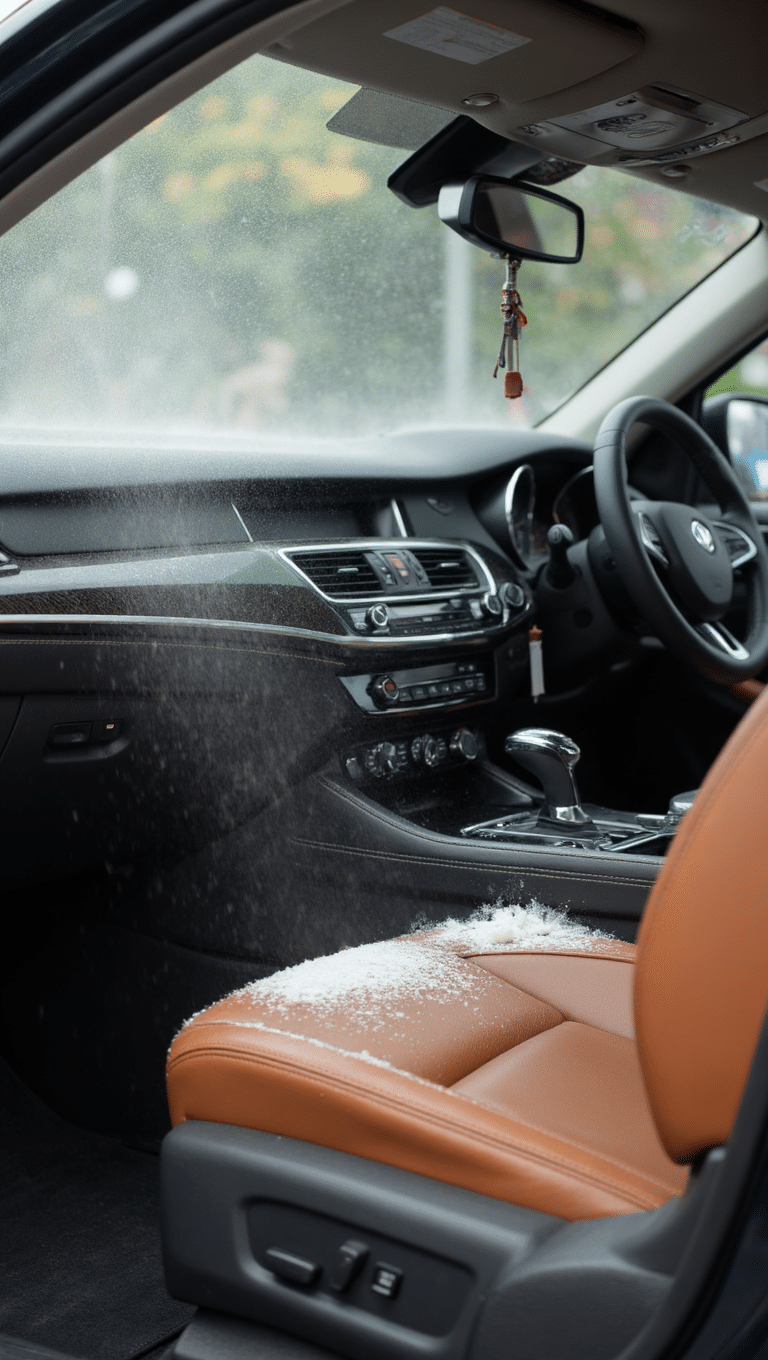
The fastest way to remove pet hair is to dampen a rubber glove or use a pumice stone, rub the fabric in one direction to ball the hair up, then vacuum with a brush attachment. This beats vacuuming alone because dry vacuums glide over embedded fur. For stubborn hair, our pet hair removal service uses steam extraction.
Why Pet Hair Is So Hard to Vacuum Out
Pet hair does not sit on top of car upholstery the way dust does. Static electricity, the barbed texture of the hair shaft, and the looped weave of automotive carpet work together to weave fur down into the fibers. A standard vacuum nozzle passes right over it because suction alone cannot break that mechanical grip. You have to agitate the hair loose first, then vacuum. Every professional method follows this two-step principle: loosen, then extract.
The Detailer’s Method, Step by Step
Step 1: Dry brush everything first. Use a stiff upholstery brush or rubber pet hair brush on all seats, carpets, and cargo areas. Work in one direction with firm strokes. You will see hair rolling into little tumbleweeds. Pick up the clumps by hand as you go. This single step removes 60 to 70 percent of visible hair.
Step 2: Damp rubber glove pass. Put on a rubber dishwashing glove, dampen it lightly, and rub the fabric in one direction. The damp rubber creates friction that grabs remaining hair and rolls it into balls. Rinse the glove frequently. This is the trick detailers use most, and it costs almost nothing.
Step 3: Pumice stone for stubborn spots. A dry pumice stone (sold as a pet hair stone) dragged lightly across carpet pulls up the deeply embedded fur that gloves miss. Use light pressure on seats to avoid fabric damage, and skip this on leather entirely.
Step 4: Vacuum with a brush attachment. Now vacuum, using a brush or turbo attachment, not the flat crevice tool. Go slowly in overlapping passes. The agitation you did in steps 1 through 3 means the vacuum can finally do its job.
Step 5: Lint roller finish. Run a sticky lint roller over seats and headrests for the fine stragglers. This is cosmetic, but it is what makes the interior look truly finished.
Step 6: Compressed air for crevices. Blast seat tracks, seatbelt buckles, console seams, and air vents with compressed air, then vacuum the debris that flies out. Hair hides in every seam.
Tools That Actually Work (and Ones That Don’t)
Worth buying: a rubber pet hair brush ($10 to $15), a pumice pet hair stone ($8), rubber gloves you already own, and a vacuum with a motorized brush head. A small portable carpet extractor ($100 to $150) is the best home investment if you drive dogs regularly; it handles both hair and the dirt underneath.
Skip: cheap battery handheld vacuums with no brush agitation (they just relocate hair), fabric softener sprays marketed for pet hair (they leave residue that attracts more dirt), and balloon-static tricks from social media (unreliable and slow on a whole interior).
Leather vs Cloth: Different Approach
Hair does not embed in leather the way it does in cloth, so leather interiors are much easier. A damp microfiber wipe followed by vacuuming the seams usually finishes the job. The real issue with leather is the hair packed into perforations and stitching, which needs a soft brush and vacuum, never a pumice stone. After hair removal, condition the leather, because Florida heat and the cleaning process both dry it out. Cloth seats are where the full six-step method earns its keep.
The Florida Factor: Humidity Bakes It In
Jacksonville adds a nasty twist: humidity and heat. Pet hair mixed with moisture mats down into carpet like felt, and it starts to smell. A car that sits in a sunny driveway with dog hair and humidity develops odor fast, which is why hair removal and odor treatment so often go together here. If your car smells like wet dog even after you remove the visible hair, the odor is in the carpet backing and seat foam, and it needs hot water extraction, not just surface cleaning.
Prevention: Keep It From Getting Bad
The best hair removal is the hair that never embeds. Use washable seat covers or a hammock-style back seat cover if your dog rides regularly. Brush your dog before car rides during shedding season. Keep a rubber brush in the car and do a two-minute pass weekly instead of a two-hour ordeal quarterly. And vacuum the cargo area monthly at minimum. Five minutes of prevention beats five hours of correction.
When to Call a Professional
Call a pro when the hair is embedded through the whole interior, when there is odor alongside the hair, when you have allergies and need extraction-level cleaning, or when you have tried the DIY method and the seats still look furry. Professional interior detailing with steam and hot water extraction removes what surface methods cannot reach, and it sanitizes at the same time. For most pet owners, one professional detail per year plus DIY maintenance in between is the sweet spot.
FAQs
What is the best tool to remove pet hair from car seats? A rubber pet hair brush or damp rubber glove beats every vacuum for the initial removal because friction loosens embedded hair that suction cannot grab. Follow with a vacuum using a brush attachment. For the deepest embedded fur, a pumice pet hair stone works on carpets.
Does pet hair damage car upholstery? The hair itself is harmless, but what comes with it is not. Dirt, dander, and moisture trapped with the hair grind into fibers, cause odors, and trigger allergies. In Florida humidity, matted pet hair can contribute to mildew in seat foam if left for months.
How do detailers get pet hair out of cars? Professionals use the same loosen-then-extract principle with stronger tools: compressed air to blast crevices, stiff brushes and pumice for agitation, commercial vacuums, then hot water extraction or steam to pull everything from the base of the fibers. The extraction step is what separates pro results from DIY.
How much does professional pet hair removal cost? In Jacksonville, pet hair removal as an add-on typically runs $40 to $80 depending on severity. As part of a full interior detail, heavy pet hair may add $50 to $100 to the base price. Severe cases with odor treatment cost more.
Will pet hair come out of car carpet completely? Yes, with the right method. Surface methods leave the deep stuff, which is why people think it is permanent. Proper agitation followed by hot water extraction removes essentially all of it, even from cars that carried dogs for years.
How do I keep dog hair out of my car between details? Use washable seat covers, brush your dog before rides, do a quick weekly rubber-brush pass, and vacuum monthly. In Florida, also crack windows or use sunshades when parked to reduce the heat and humidity that mat hair into fabrics.
Tired of fighting fur? Our mobile pet hair removal comes to your driveway anywhere in Jacksonville. Call or text (904) 552-8777.
By the Mobile Car Detail Jax Team